Introduction
A forged stainless steel bar must match the component’s material grade, required dimensions, machining allowance, and operating environment. For buyers in Goa, checking these details before requesting a quotation helps reduce material mismatches and avoidable procurement delays.
1. Why Forged Bar Requirements Need More Than a Grade Number
Stainless steel forged bars are used as raw material for industrial components that may require substantial machining, mechanical strength, or specific material properties. However, selecting a bar based only on a grade such as 304, 316, or 410 may leave important requirements unresolved.
Buyers should define three things before approaching a supplier:
– Material grade: The stainless steel composition and properties required for the application.
– Finished component requirements: The shape, dimensions, machining allowance, and dimensional tolerances needed after processing.
– Operating conditions: Exposure to moisture, chemicals, temperature changes, mechanical loading, or other service conditions.
A suitable grade does not automatically guarantee suitability for every operating environment. The complete material specification and manufacturing condition must match the component design.
2. How Forging Requirements Affect Material Selection
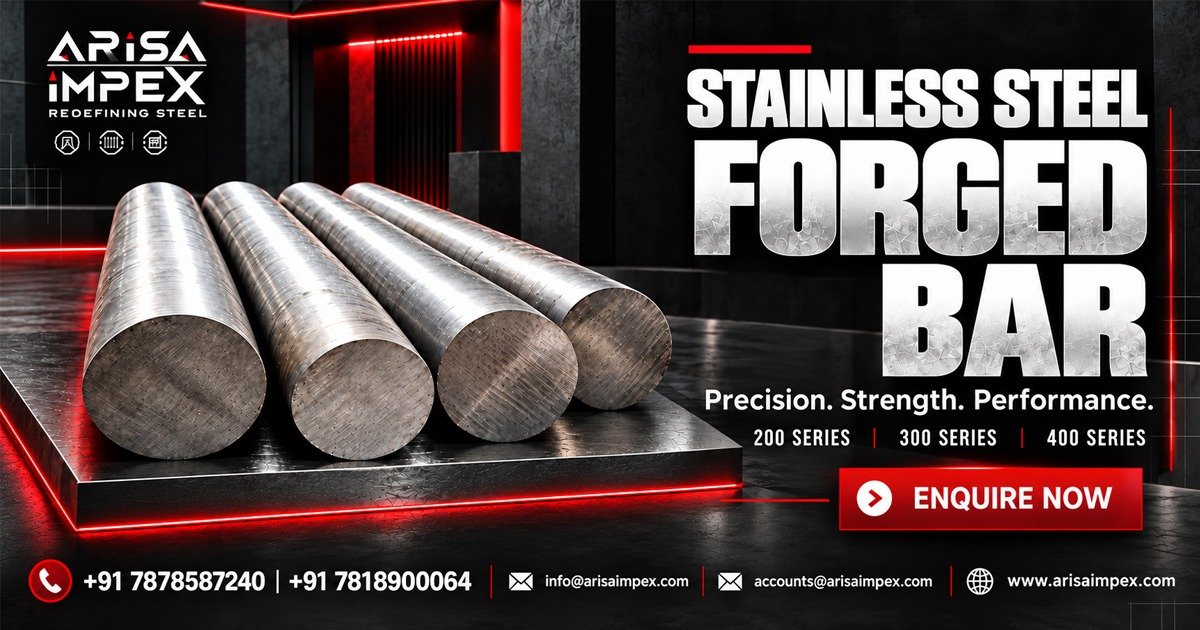
Forging involves shaping heated metal under compressive force. Depending on the manufacturing route, it can produce a bar or billet intended for further machining into industrial components.
For procurement purposes, the important question is not simply whether the material is forged. Buyers should also establish the required material condition, dimensional range, inspection criteria, and applicable product specification.
For example, a large machined shaft blank may require different dimensional allowances and inspection arrangements from a smaller component intended for routine machining.
Before ordering, confirm:
– Whether the requirement is for a forged bar, forged billet, or another forged product form.
– Whether the specified dimensions refer to the supplied material or the finished component.
– Which material and product standards apply to the order.
– Whether heat treatment, surface preparation, or additional machining is required.
– Whether inspection records and material traceability are mandatory.
These details help the supplier prepare a quotation that can be evaluated against the actual engineering requirement.
3. Which Technical Documents Should Buyers Request?
Documentation helps establish whether the delivered material matches the purchase order. It is particularly important when forged stock will be used for critical machined components.
Depending on the application and agreed specification, buyers may need to review the following:
– Material Test Certificate (MTC): Check the stated grade, heat or batch identification, chemical composition, and reported mechanical properties.
– Product specification: Confirm that the cited standard applies to the actual product form and required material condition.
– Dimensional inspection records: Verify the supplied diameter, length, or other specified dimensions.
– Non-destructive testing records: Where required by the design or purchase specification, confirm the applicable method and acceptance criteria.
– Traceability details: Ensure material identification can be linked to the relevant documentation and delivered batch.
Standards such as ASTM A276 and ASTM A479 are associated with stainless steel bars, but the correct standard depends on the product, application, and purchase requirements. Do not assume that a standard listed for one bar product automatically covers every forged-bar requirement.
4. How to Compare Two Forged Bar Quotations Fairly
A lower quoted price does not necessarily represent the lower total procurement cost. Buyers should compare quotations on an equivalent technical basis.
| Comparison point | What to verify |
| Grade and standard | Same required material and applicable specification |
| Product form | Forged bar or the exact alternative requested |
| Dimensions | Same diameter, length, and tolerances |
| Material condition | Required heat treatment or supplied condition |
| Testing | Agreed inspection methods and acceptance criteria |
| Documentation | MTC, traceability, and other required records |
| Commercial terms | Quantity, packing, freight, delivery schedule, and taxes |
Pay attention to the quantity basis and actual dimensions used for weight calculations. Differences in diameter, length, density assumptions, or permissible tolerances can affect the estimated material weight and overall quotation.
For projects in Goa, include the final delivery destination in the enquiry so freight, unloading arrangements, and delivery scheduling can be evaluated alongside the material price.
5. A Goa Procurement Scenario: Avoiding a Machining Mismatch
Consider a hypothetical engineering workshop in Verna that needs stainless steel forged stock for a machined pump component.
The workshop sends a quotation request mentioning only the grade and approximate diameter. One supplier quotes material based on the requested diameter, while another assumes that the dimension refers to the finished component.
Although both quotations appear comparable, they may cover different quantities of usable material.
The better approach is to share the component drawing, required finished dimensions, machining allowance, material specification, and inspection requirements before comparing prices.
This simple clarification helps procurement and engineering teams evaluate equivalent offers and reduces the risk of receiving material that does not suit the intended machining operation.
6. What Should Be Checked When the Material Arrives?
Receiving inspection is the final opportunity to identify discrepancies before the bar enters production.
Use the purchase order and approved documentation as the inspection reference.
– Match the material grade and identification markings with the purchase order and certificate.
– Measure the supplied dimensions and verify the agreed tolerances.
– Inspect the surface for visible damage, deep marks, or other unacceptable conditions.
– Confirm that required inspection reports and traceability documents have been received.
– Segregate and report any discrepancy before the material is released for machining.
Visual inspection alone cannot establish internal material integrity. If ultrasonic testing, magnetic particle inspection, or another non-destructive examination is specified, verify the corresponding records and acceptance requirements separately.
7. Preparing a Clear Enquiry for a Stainless Steel Forged Bar Supplier In Goa
A detailed enquiry makes it easier to assess technical suitability, quotation accuracy, and delivery planning.
Before contacting a supplier, prepare the following information:
– Required stainless steel grade and applicable standard.
– Forged bar or billet form, dimensions, length, and quantity.
– Component drawing or machining requirements, where available.
– Required heat treatment, surface condition, and inspection documentation.
– Delivery address in Goa, expected delivery date, and any packing or unloading constraints.
For repeat purchases, include the previous purchase order or material specification where relevant. This can help identify changes in dimensions, testing requirements, or material condition before a new order is finalized.
8. Four Service and Support Discussion Points
When discussing a forged-bar requirement with Arisa Impex, buyers can clarify the following points as part of their enquiry. Confirm the availability and scope of each requirement before placing an order.
1. Requirement clarification: Share the grade, dimensions, quantity, and intended component.
2. Material specification coordination: Confirm the applicable product standard and required material condition.
3. Quality documentation: Discuss the certificates, traceability, and inspection records required for acceptance.
4. Dispatch planning: Confirm the delivery destination, packaging expectations, freight arrangements, and agreed schedule.
9. Planning Industrial Material Procurement Across Goa
Goa-based buyers may source stainless steel forged bars for engineering workshops, equipment maintenance, fabrication, and industrial component manufacturing. The procurement plan should account for the actual receiving site, transport access, unloading facilities, and project schedule.
For buyers searching for a Stainless Steel Forged Bar Supplier In Goa, sourcing from Ahmedabad requires coordination between the supplier, transport provider, and receiving team. Confirm dispatch timing and delivery terms before committing the material to a production schedule.
Relevant business and industrial locations include Panaji, Margao, Vasco da Gama, Verna Industrial Estate, Ponda, Mapusa, Bicholim, Kundaim Industrial Estate, Tuem Industrial Estate, Sancoale, Corlim, Cuncolim, Cortalim, Dharbandora, Quepem, Canacona, Pernem, Sanquelim, Tivim, Colvale, Porvorim, Betim, Chicalim, Zuari Nagar, and Mormugao.
These locations provide geographic context for procurement planning; their inclusion does not confirm delivery coverage or existing customers in each area.
10. Discuss Your Requirement With Arisa Impex
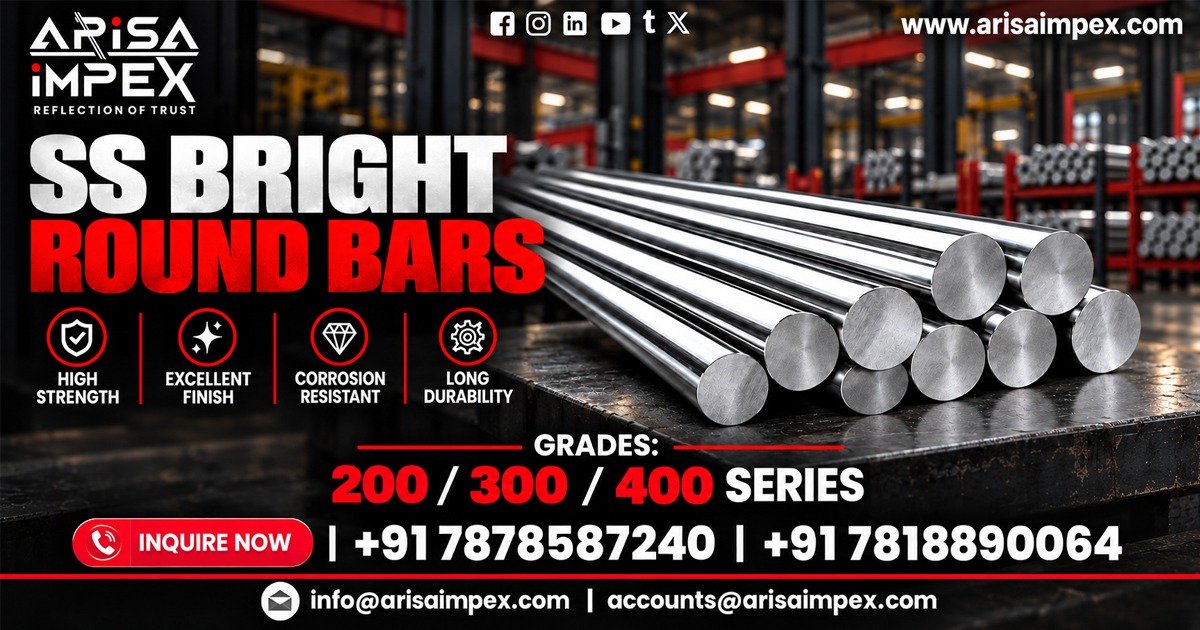
Arisa Impex lists stainless steel round bars and other stainless steel products on its official website. The company identifies Ahmedabad, Gujarat, India, as its base. Its product information also discusses forged-bar requirements and relevant material specifications.
For a project requiring forged stock in Goa, buyers can use arisaimpex.com to review the company’s published product information and submit an enquiry.
Manufacturing support is based in Ahmedabad, Gujarat, India. Buyers should confirm the exact forged product, required grade, size availability, testing scope, and commercial terms directly with the company before finalizing a purchase.
11. Frequently Asked Questions
Q1. Is a stainless steel forged bar interchangeable with a hot-rolled bar?
Not automatically. The manufacturing route, material condition, dimensions, and mechanical requirements may differ. Confirm the product form specified by the component drawing or engineering standard before accepting an alternative.
Q2. Does a larger forged bar always provide better strength?
No. Size alone does not determine material strength or suitability. Grade, heat treatment, material condition, component design, and applicable mechanical-property requirements must all be considered.
Q3. When should ultrasonic testing be specified for a forged bar?
Ultrasonic testing may be required when internal discontinuities must be assessed under the applicable engineering specification. Confirm the testing standard, inspection coverage, acceptance criteria, and reporting requirements before ordering.
Q4. What affects the delivered price of stainless steel forged bars in Goa?
Price depends on grade, dimensions, quantity, manufacturing route, heat treatment, machining, inspection, documentation, packing, and transport. Request quotations using the same technical specification and delivery terms for a meaningful comparison.
12. Conclusion
Selecting forged stainless steel stock requires more than matching a grade and price. Buyers should align the product form, dimensions, material condition, inspection requirements, and documentation with the finished component’s needs. For Goa projects, clear technical enquiries and delivery planning help procurement teams compare quotations and manage material acceptance more effectively.
Planning a stainless steel forged bar purchase in Goa? Visit Arisa Impex to discuss your material requirements, technical specifications, and delivery expectations.
Website: www.arisaimpex.com
E-Mail Id: info@arisaimpex.com, accounts@arisaimpex.com
Phone: +91 7878587240 | +91 7818890064