When machining large components or fabricating heavy-duty industrial parts, material selection affects production quality and machining requirements. Industrial Stainless Steel Forged Bars for Machining and Fabrication offer a material option for demanding engineering work, with Arisa Impex providing manufacturing support from Ahmedabad, Gujarat, India.
1. Why Forged Bar Selection Matters for Heavy Industrial Components
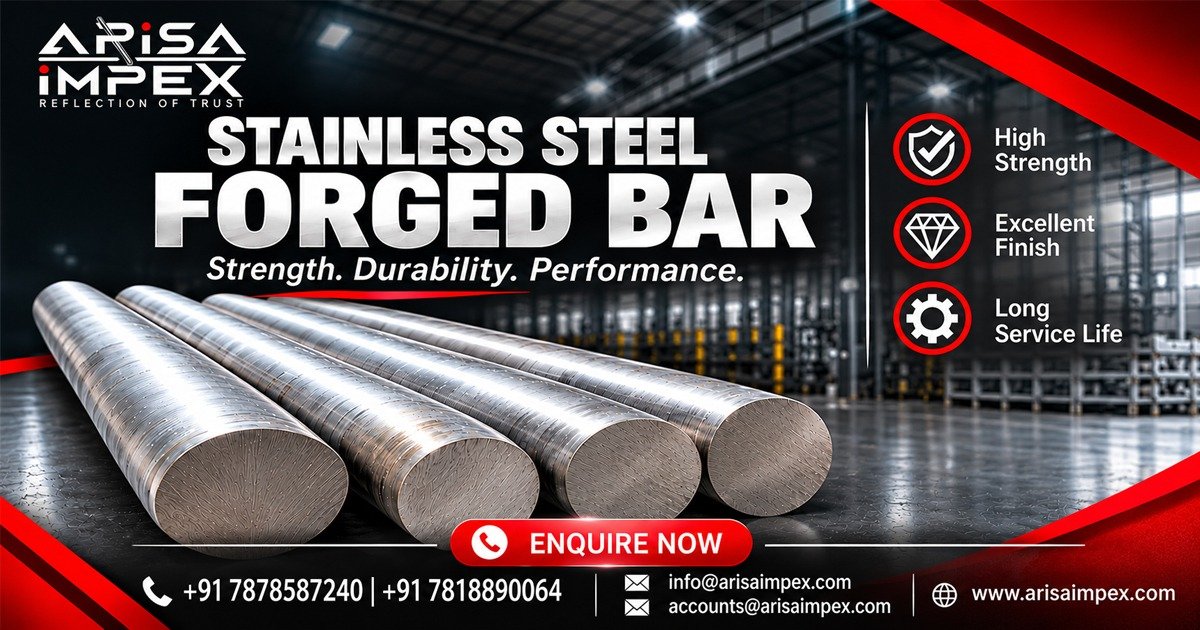
Stainless steel forged bars are used as starting material for manufacturing components that require specific dimensions, mechanical properties, and machining allowances.
Unlike selecting material only by its outer appearance, buyers need to consider how the bar will behave during cutting, turning, drilling, milling, and subsequent fabrication.
Forged material is produced through controlled deformation under compressive force. Depending on the manufacturing route, forging can help develop a worked internal structure suitable for particular engineering requirements.
These bars can be considered for manufacturing:
- Industrial machine shafts and heavy-duty components.
- Pump and valve components.
- Engineering equipment parts.
- Industrial fittings and connecting components.
- Custom-machined metal components.
- Fabricated parts requiring stainless steel material.
The important point is to match the material condition with the finished component’s design and operating environment.
2. What Happens When the Bar Reaches the Machining Workshop?
The condition of the incoming bar directly affects how a machining workshop plans its production activities.
For example, a component with a large diameter may require rough turning before reaching its final dimensions. If the supplied material has insufficient machining allowance, the workshop may face difficulties achieving the required finished size.
A typical machining sequence includes:
Step 1 – Incoming Material Inspection
Check the material grade, dimensions, surface condition, identification, and available test documentation.
Step 2 – Cutting to Required Length
The bar is cut according to the component drawing, including suitable allowance for machining operations.
Step 3 – Initial Machining
Turning, facing, drilling, boring, or milling operations are performed according to the component design.
Step 4 – Dimensional Verification
The machined component is checked against the required dimensions and drawing tolerances.
Step 5 – Final Component Preparation
Depending on the application, additional finishing, fabrication, or assembly operations may follow.
The machining route should be planned before ordering so that material dimensions, condition, and allowance are suitable for the intended component.
3. Matching Stainless Steel Grades With the Actual Working Environment
Material grade selection should begin with the operating conditions of the finished component rather than simply choosing a commonly purchased stainless steel grade.
Different stainless steel grades have different corrosion resistance, strength, hardness, weldability, and machining characteristics.
| Stainless steel grade | Important consideration | Potential industrial use |
| SS 304 | General corrosion resistance and fabrication suitability | General engineering components |
| SS 304L | Lower carbon variant | Components involving welding |
| SS 316 | Improved resistance to chloride-related corrosion | Chemical and marine equipment |
| SS 316L | Lower carbon variant of 316 | Welded chemical equipment |
| SS 410 | Martensitic stainless steel | Selected shafts and mechanical components |
| SS 420 | Hardness and heat-treatment considerations | Selected wear-related components |
| F55 / Super Duplex | High strength and corrosion-related requirements | Demanding oil and gas equipment |
These are general material-selection considerations, not a guarantee that every grade is available in every forged size or condition.
Before confirming an order, discuss the following:
- Required chemical composition.
- Mechanical property requirements.
- Operating temperature and environment.
- Machining and welding requirements.
- Heat-treatment condition.
- Applicable material standard.
A suitable grade reduces the risk of selecting material that does not match the component’s actual working conditions.
4. Dimensions and Machining Allowance: Details That Should Not Be Overlooked
Industrial Stainless Steel Forged Bars for Machining and Fabrication must be specified according to the dimensions of the finished component and the manufacturing operations involved.
A buyer should not provide only the approximate diameter or length. The complete material requirement should be shared with the supplier.
Important dimensional considerations include:
- Diameter or cross-section: Select a suitable starting size based on the final component dimensions.
- Length: Consider cutting allowance and the number of components required from each bar.
- Machining allowance: Provide sufficient extra material for removing the outer surface and achieving the finished dimensions.
- Surface condition: Confirm whether black, rough-turned, machined, or another agreed condition is required.
- Straightness: Check whether straightness requirements are important for the machining setup.
- Dimensional tolerance: Confirm acceptable variations before production planning.
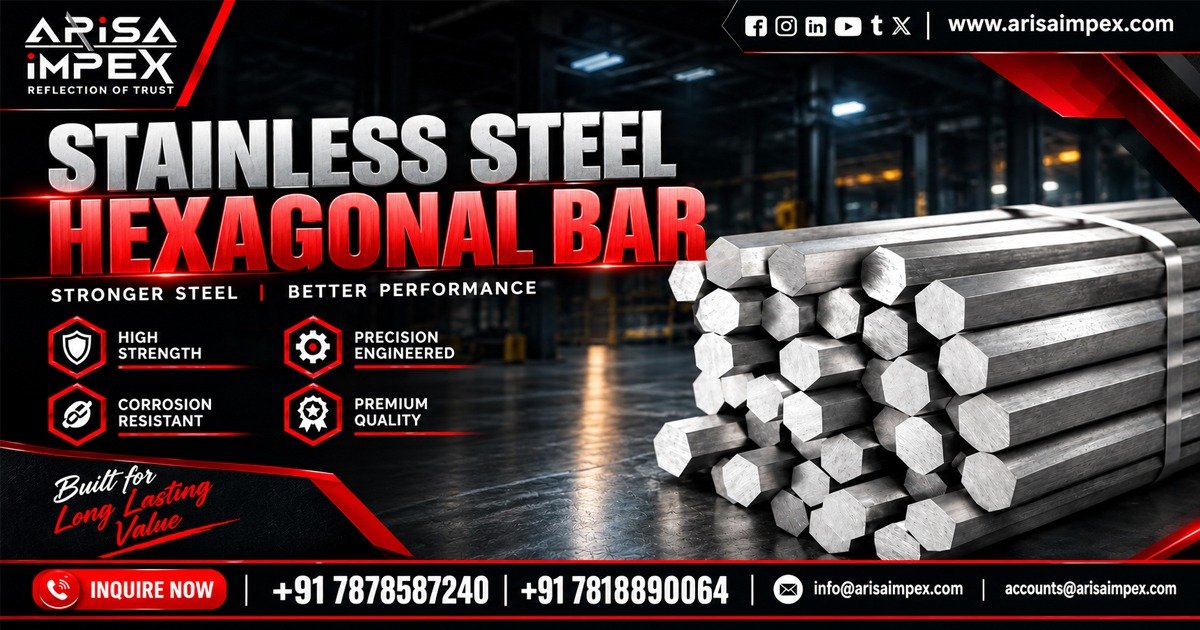
Arisa Impex’s published forged-bar information describes round, square, hexagonal, and rectangular forms, with typical size ranges depending on forging requirements. Actual availability and dimensions should be confirmed during enquiry.
5. Internal Soundness and Material Verification Before Production
A forged bar may look acceptable from the outside, but visual inspection alone cannot establish its internal condition.
For critical components, material verification should form part of the purchasing process.
Buyers can discuss the following quality checks with the supplier:
- Chemical composition: Verify whether the supplied material matches the ordered stainless steel grade.
- Mechanical properties: Check relevant strength, hardness, and other specified properties.
- Dimensional inspection: Confirm diameter, width, length, and dimensional variations.
- Ultrasonic testing: Consider UT where internal discontinuity inspection is required.
- Magnetic particle inspection: Consider MPI where appropriate for the material and inspection requirement.
- Surface inspection: Look for visible cracks, laps, scale, or other unacceptable surface conditions.
- Material traceability: Match identification and test documentation with the supplied material.
Not every order requires every test. Inspection requirements should be agreed according to the component’s design, applicable specification, and purchasing documents.
6. Fabrication Planning Requires More Than Material Availability
Machining and fabrication can involve different material requirements. A bar suitable for one operation may not automatically be suitable for another.
For example, a component requiring extensive machining needs an appropriate material condition and sufficient machining allowance. A welded assembly requires attention to grade compatibility, welding procedure, and the relevant post-welding requirements.
Before starting fabrication, consider:
- Whether the selected grade is suitable for the welding process.
- Whether the component requires heat treatment.
- Whether machining should happen before or after fabrication.
- Whether the finished part needs additional surface treatment.
- Whether the material can be handled and positioned safely.
- Whether the drawing specifies special inspection requirements.
This planning is particularly important for pump components, valve parts, industrial machinery, and equipment used in chemical or process industries.
7. Services
The following are relevant service areas to discuss for stainless steel forged-bar requirements:
1. Forged Bar Requirement Assessment: Understanding the component drawing, grade, dimensions, and intended industrial use.
2. Material and Size Coordination: Discussing suitable stainless steel grades, cross-sections, lengths, and machining allowances.
3. Inspection and Documentation Coordination: Reviewing applicable material testing, dimensional checks, and documentation requirements.
4. Industrial Material Supply Support: Coordinating material requirements for machining workshops, fabrication units, and engineering projects.
8. Location
Gujarat has several engineering, metalworking, machinery manufacturing, chemical, and fabrication clusters where stainless steel raw materials are relevant to industrial production. Manufacturing support from Ahmedabad can help businesses coordinate their material enquiries across Ahmedabad, Vatva, Naroda, Odhav, Rakhial, Changodar, Sanand, Bavla, Gandhinagar, Kalol, Mehsana, Nadiad, Anand, Vadodara, Halol, Bharuch, Ankleshwar, Dahej, Surat, Vapi, Rajkot, Jamnagar, Morbi, Bhavnagar, and Kutch.
9. Discussing Your Forged Bar Requirement With Arisa Impex
Every machining and fabrication project has different material requirements. Sharing the finished component drawing and operating conditions helps establish a clearer purchasing specification.
Arisa Impex provides stainless steel industrial material solutions, including stainless steel round bars and other stainless steel product forms. Its published product range also includes forged-bar supply information.
With manufacturing support from Ahmedabad, Gujarat, India, the company can be approached to discuss:
- Required stainless steel grade and material form.
- Bar dimensions and project-specific requirements.
- Machining and fabrication suitability.
- Inspection, documentation, and supply coordination.
Visit Arisa Impex to explore its industrial material range and discuss your requirement.
Frequently Asked Questions
Q1. Which stainless steel grade should be selected for forged machining bars?
A: The selection depends on corrosion exposure, mechanical properties, hardness, and machining requirements. SS 304, SS 316, SS 410, and other grades may be considered according to the application.
Q2. What information should buyers provide when ordering forged bars?
A: Share the material grade, required cross-section, diameter, length, quantity, machining allowance, applicable standard, and inspection requirements.
Q3. Can stainless steel forged bars be used for welded fabrication?
A: Yes, suitable grades can be used in fabrication involving welding. However, weldability, filler material, welding procedure, and post-weld requirements should be evaluated for the selected grade.
Q4. Why is ultrasonic testing considered for forged bars?
A: Ultrasonic testing can help identify internal discontinuities that may not be visible during external inspection. Its requirement depends on component criticality and the agreed inspection specification.
Conclusion
Successful forged-bar procurement starts with understanding the finished component, its operating environment, and the machining or fabrication route. Buyers should verify grade, dimensions, material condition, and inspection requirements before ordering. Arisa Impex offers manufacturing support from Ahmedabad, Gujarat, India, for industrial material enquiries and project discussions.
Discuss your stainless steel forged-bar requirements with Arisa Impex and identify suitable material options for your next engineering project.
Website: www.arisaimpex.com
E-Mail Id: info@arisaimpex.com, accounts@arisaimpex.com
Phone: +91 7878587240 | +91 7818890064